Laser Cladding Services | Wear & Corrosion Protection Coatings
High-performance metallurgical bonding of wear-resistant alloys onto worn or new component surfaces. Restore dimensional accuracy, add functional coatings, and multiply component service life — all in a single laser process.
What is Laser Cladding?
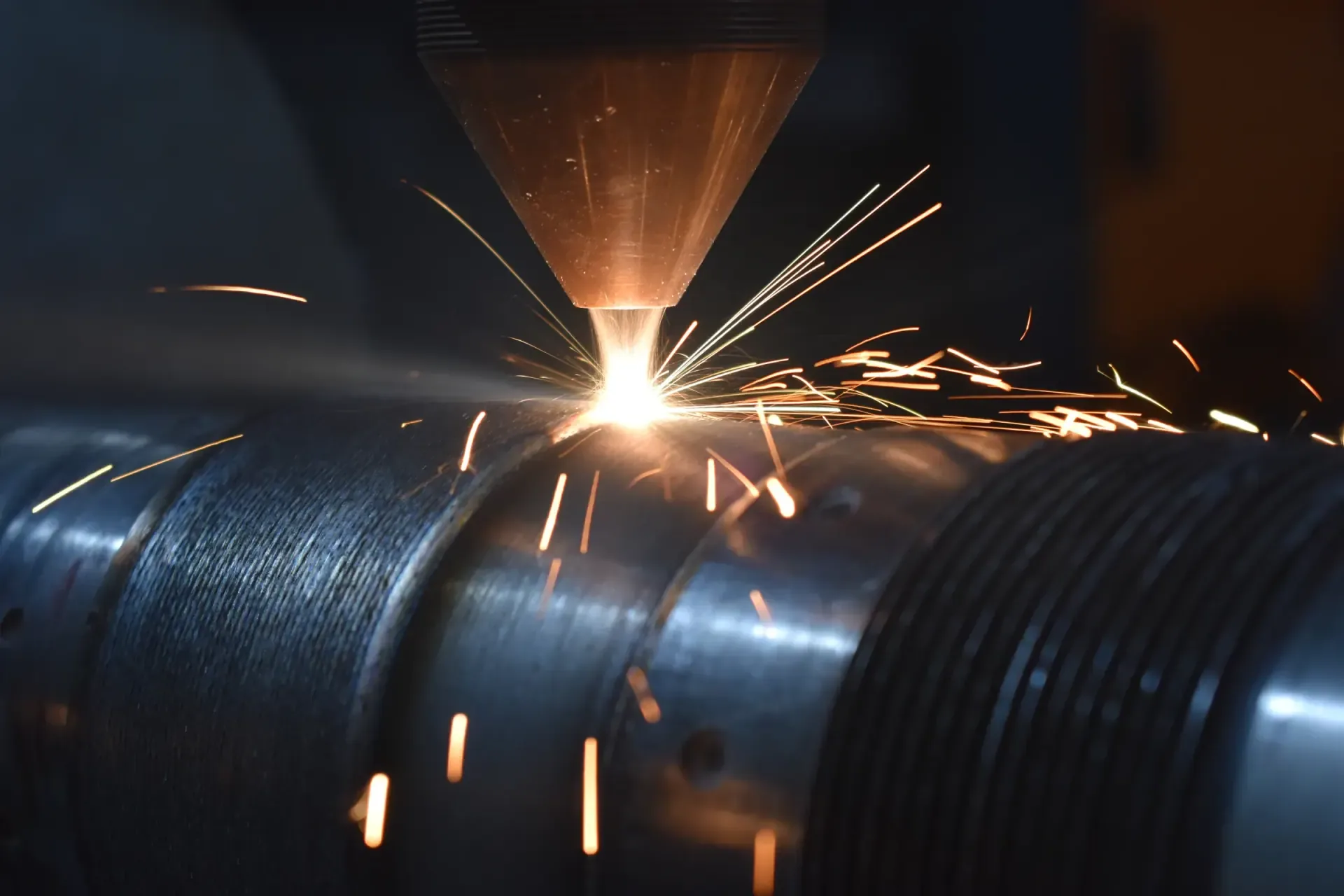
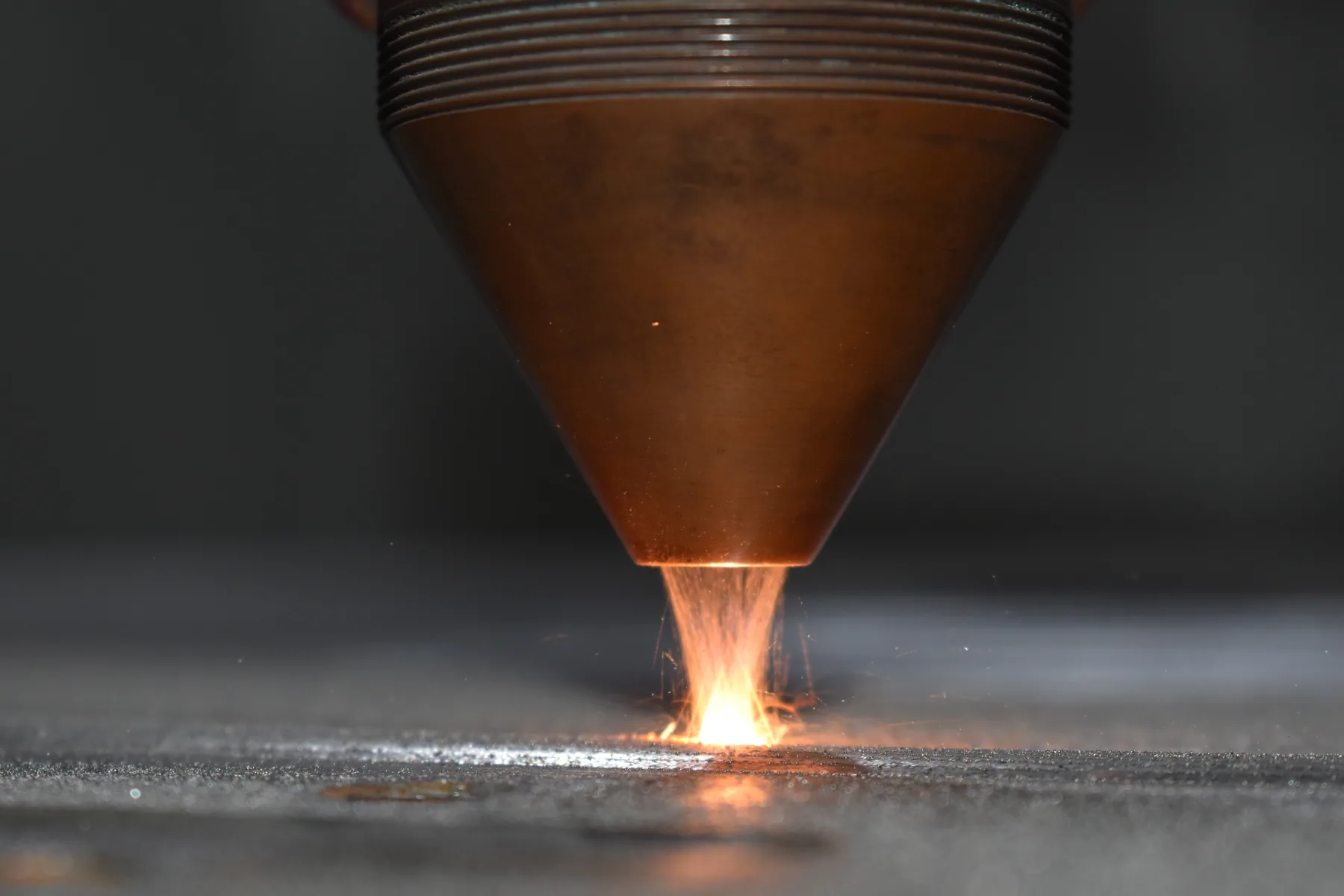
Laser cladding (also called laser metal deposition) uses a high-powered laser beam to melt a stream of metal powder or wire onto a substrate, creating a fully dense, metallurgically bonded overlay layer.
Unlike thermal spray, weld overlay, or chrome plating, laser cladding achieves a true metallurgical bond with minimal heat input — eliminating porosity, delamination, and distortion risks.
The result is a hard, wear-resistant surface with properties precisely tailored to the operating environment — corrosion resistance, high-temperature performance, or extreme abrasion resistance.
Why Laser Cladding Wins
Up to 10x Life Extension
Dramatically extend component service life through wear-resistant alloy deposition.
Superior Wear Resistance
Tungsten carbide, Stellite, and Inconel cladding layers resist abrasion, erosion, and corrosion.
Minimal Dilution
Our controlled laser parameters ensure <5% dilution, preserving clad layer properties.
Precise Heat Input
Narrow HAZ eliminates distortion risks on precision-machined components.
Fast Turnaround
High deposition rates of up to 2 kg/hr with automated 5-axis processing.
Any Substrate
Works on steel, cast iron, titanium, nickel alloys, and dissimilar metals.
Step-by-Step Workflow
Component Assessment
Dimensional inspection, material analysis, failure mode mapping.
Alloy Selection
Metallurgical team selects optimal cladding material for the operating environment.
Surface Preparation
Cleaning, pre-heating, and CNC preparation for bond-quality substrate.
Laser Deposition
5-axis CNC laser cladding with coaxial powder feed and real-time thermal monitoring.
Post-Processing
Stress relief, machining to final dimensions, and surface finishing.
Quality Validation
Hardness testing, CMM measurement, microstructural analysis, and documentation.
What We Clad
Laser Cladding Materials
We formulate and apply a wide range of alloy systems to match the operating environment and failure mode of every component.
Cobalt-Based Alloys
- Stellites - Gr. 6, 12, 21, 1 & 32
- Triboloys - 400 & 800
Nickel-Based Alloys
- INCONELs - 625, 718, INCO 82
- Hastelloy C-276m
- Colmonoy - 4, 5, 6
Iron-Based Alloys
- Stainless Steels - 316, 410, 420
- Low Alloy Steels - EN24 etc.
- Rockit - 431, 401, 606
Tool Steels
- M2
- H13
- A11
Carbides
- Tungsten Carbides
- Chromium Carbides
- Vanadium Carbides
Copper Alloys
- Nickel Aluminium Bronze (NAB)
- Aluminium Bronze
- Phosphor Bronze
Laser Cladding vs. Conventional Methods
| Property | Laser Cladding | Weld Overlay | Thermal Spray | Chrome Plating |
|---|---|---|---|---|
| Dilution | 0.5–2% | 5–15% | None (mechanical) | None |
| Bond Strength | Metallurgical | Metallurgical | Mechanical | Mechanical |
| Heat Input / HAZ | Very low | High | None | None |
| Distortion | Negligible | Moderate–High | None | None |
| Min. Deposit Thickness | 0.2 mm | 2–3 mm | 0.05 mm | 0.001 mm |
| Dimensional Accuracy | ±0.1 mm | ±1 mm | ±0.05 mm | ±0.005 mm |
| Porosity / Defects | Minimal | Possible | Possible | Cracking risk |
Have a Component That Needs Cladding?
Send us your requirements. Our metallurgists will evaluate and propose the ideal solution.